
How dark the sky is at Sunshine Coast: Bortle Class 4, rural and suburban transition
The zenith sky here reads 21.62 magnitudes per square arcsecond. That is about 1.4 times the brightness of a pristine natural sky (22.0), the extra coming from artificial light scattered in the air.
Milky Way
The Milky Way is impressive well above the horizon but loses its fine detail
Zodiacal light
Zodiacal light is visible but faint
Faintest naked-eye stars
Magnitude 6.1 to 6.5 overhead
Naked eye
Light domes from towns show in several directions; M33 is hard even with averted vision
At the eyepiece
Clusters, planetary nebulae and bright galaxies are fine; faint nebulae need a filter
Sky brightness and class come from the World Atlas of Artificial Night Sky Brightness (Falchi et al. 2016, CC BY-NC 4.0), with natural skyglow added. On the night, haze, smoke, humidity and the Moon set the real limit.
What's up from Sunshine Coast by season
At latitude 26.8°S, the south celestial pole stands 27° above the horizon. Every star south of declination +63° rises at some time of year. The Milky Way core in Sagittarius climbs to 88° above the southern horizon. These are the constellations well placed, 35° or more above the horizon, at about 10 pm in the middle of each season, brightest first.
January evenings (summer): Canis Major, Carina, and Orion
- Canis MajorOverhead, brightest star Sirius
- CarinaIn the southeast, brightest star Canopus
- OrionHigh in the north, brightest star Rigel
- Canis MinorIn the northeast, brightest star Procyon
- EridanusHigh in the west, brightest star Achernar
- TaurusIn the northwest, brightest star Aldebaran
- GeminiIn the north, brightest star Pollux
- VelaIn the southeast, brightest star Gamma Velorum
Also well placed: Hydra, Puppis, Lepus, Columba, Hydrus, Dorado, Pictor, Reticulum, Pyxis, Monoceros, Volans, Fornax, Horologium, Caelum, Mensa.
April evenings (fall): Carina, Centaurus, and Crux
- CarinaIn the southwest, brightest star Canopus
- CentaurusHigh in the southeast, brightest star Alpha Centauri
- CruxHigh in the south, brightest star Acrux
- VirgoHigh in the northeast, brightest star Spica
- LeoIn the northwest, brightest star Regulus
- VelaHigh in the southwest, brightest star Gamma Velorum
- HydraHigh in the west, brightest star Alphard
- PuppisIn the southwest, brightest star Naos
Also well placed: Lupus, Corvus, Libra, Musca, Circinus, Crater, Pyxis, Volans, Chamaeleon, Antlia, Coma Berenices, Sextans.
July evenings (winter): Aquila, Scorpius, and Sagittarius
- AquilaIn the northeast, brightest star Altair
- ScorpiusOverhead, brightest star Antares
- SagittariusHigh in the east, brightest star Kaus Australis
- Triangulum AustraleIn the south, brightest star Atria
- PavoIn the south, brightest star Peacock
- OphiuchusHigh in the north, brightest star Rasalhague
- LupusHigh in the southwest, brightest star Uridim
- LibraHigh in the west, brightest star Zubeneschamali
Also well placed: Serpens, Hercules, Ara, Capricornus, Indus, Circinus, Sagitta, Telescopium, Apus, Scutum, Norma, Corona Australis, Microscopium.
October evenings (spring): Piscis Austrinus, Grus, and Cetus
- Piscis AustrinusOverhead, brightest star Fomalhaut
- GrusHigh in the southwest, brightest star Alnair
- CetusHigh in the northeast, brightest star Diphda
- PegasusIn the north, brightest star Enif
- PhoenixHigh in the southeast, brightest star Ankaa
- HydrusIn the south, brightest star Beta Hydri
- CapricornusHigh in the west, brightest star Deneb Algedi
- AquariusHigh in the northwest, brightest star Sadalsuud
Also well placed: Tucana, Indus, Reticulum, Telescopium, Pisces, Fornax, Horologium, Equuleus, Sculptor, Microscopium.
Showpieces from Sunshine Coast through the year
| Sight | Constellation | January | April | July | October |
|---|---|---|---|---|---|
| Orion Nebula (M42) | Orion | High in the north | - | - | - |
| Pleiades (M45) | Taurus | In the northwest | - | - | - |
| Carina Nebula | Carina | In the southeast | High in the south | - | - |
| Large Magellanic Cloud | Dorado | In the south | - | - | In the southeast |
| 47 Tucanae | Tucana | In the south | - | - | In the south |
| Omega Centauri | Centaurus | - | High in the southeast | In the southwest | - |
| Southern Cross | Crux | - | High in the south | In the southwest | - |
| Milky Way core | Sagittarius | - | - | Overhead | - |
| Hercules Cluster (M13) | Hercules | - | - | In the north | - |
| Ring Nebula (M57) | Lyra | - | - | In the north | - |
| Lagoon Nebula (M8) | Sagittarius | - | - | Overhead | - |
At about 10 pm on the 15th of each month; a dash means the sight is below 25° then.
Never set from Sunshine Coast
Only skim the northern horizon from Sunshine Coast
Never rise from Sunshine Coast
Where to set up at Sunshine Coast
The coordinates on this page point to DarkSky International listing point: 26.750°S, 152.850°E.
Map data © OpenStreetMap contributors. Open the larger map · Directions. Arrive before dark, park facing away from other observers, and use red light only.
Sunshine Coast among the dark sky places of Australia
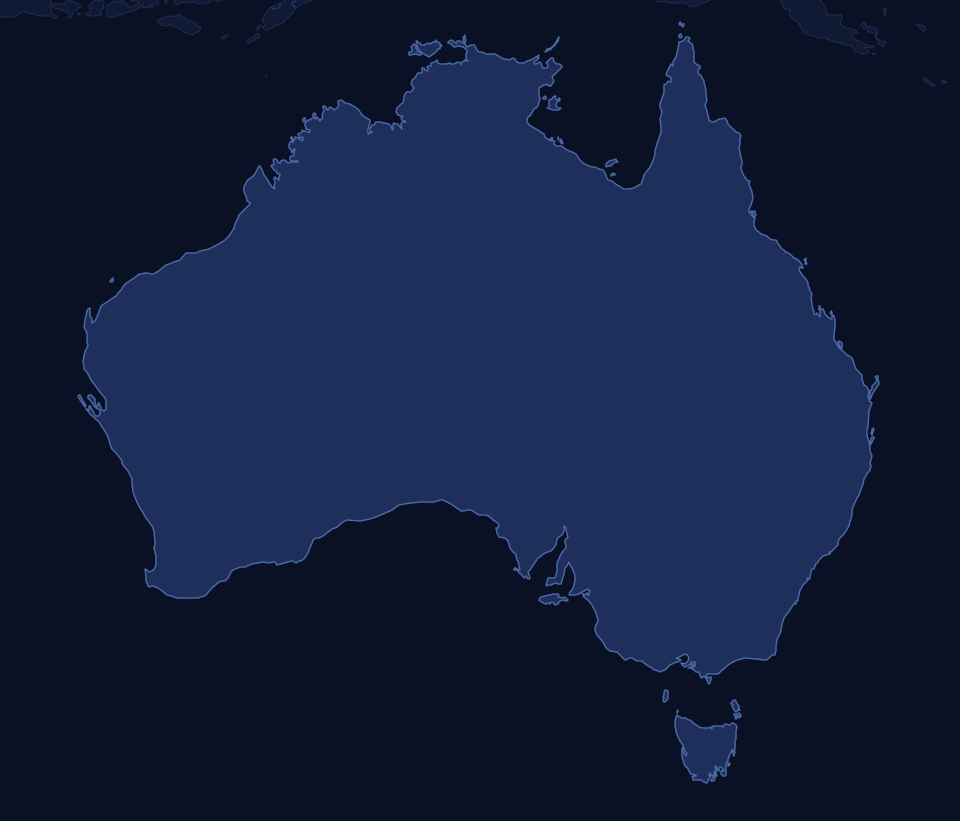
Each dot is a dark sky place, colored by Bortle class; select one for its page. Diamonds are star parties. See Dark sky places in Australia for the full list, darkest first.
Camping and lodging at Sunshine Coast
Check the official site for campgrounds and overnight rules; many parks close their gates at night, so ask about after-dark access.
Dark sky places nearest Sunshine Coast
| Place | Where | Bortle | Distance |
|---|---|---|---|
| Warrumbungle National Park | Coonabarabran, Australia | 1 | 628 km (390 mi) |
| Barrenjoey Headland | Palm Beach, Australia | 4 | 773 km (481 mi) |
| The Jump-Up Dark Sky Sanctuary | Winton, Australia | 1 | 1,086 km (675 mi) |
| Winton | Winton, Australia | 4 | 1,104 km (686 mi) |
| Arkaroola Dark Sky Sanctuary | Arkaroola Village, Australia | 1 | 1,377 km (856 mi) |
| Snake Valley Observatory | Snake Valley, Australia | 2 | 1,488 km (925 mi) |
| River Murray Dark Sky Reserve | Swan Reach, Australia | 2 | 1,535 km (954 mi) |
| Carrickalinga Dark Sky Community | Carrickalinga, Australia | 3 | 1,683 km (1,046 mi) |
Star parties near Sunshine Coast
| Star party | Near | Distance | Usual timing |
|---|---|---|---|
| Queensland Astrofest | Linville, Queensland | 59 km (36 mi) | Winter new moon |
| OzSky Star Safari | Coonabarabran, New South Wales | 611 km (380 mi) | Autumn new moons, two sessions |
| South Pacific Star Party | Ilford, New South Wales | 748 km (465 mi) | Autumn new moon |
Observatories and astronomy clubs near Sunshine Coast
Nearest astronomy clubs
- South East Queensland Astronomical SocietyBracken Ridge, Queensland, Australia, 66 km (41 mi). Meets Monthly club meeting, 7:30 pm
- Brisbane Astronomical SocietyBrisbane, Queensland, Australia, 82 km (51 mi)
- Astronomical Association of QueenslandBrisbane, Queensland, Australia, 85 km (53 mi). Meets Monthly meeting, Saturday afternoon
- Redlands Astronomical SocietyOrmiston, Queensland, Australia, 96 km (59 mi). Meets 2nd Tuesday monthly, 7:30 pm
See observatories and astronomy clubs around the world. Local clubs often hold their star parties at dark sky places like this one.
Sunshine Coast record
Every value in the dark sky places dataset for Sunshine Coast
| Park | 342 |
|---|---|
| Name | Sunshine Coast |
| Region | QLD |
| Country | Australia |
| Location | Maleny |
| IDS | reserve |
| URL | https://darksky.org/places/sunshine-coast/ |
| Lat | -26.75000 |
| Lon | 152.85000 |
| LatLonSpot | DarkSky International listing point |
| Status | Open |
| Sources | https://darksky.org/places/sunshine-coast/ |
| Bortle | 4 |
| SQM | 21.62 |
| DarkSky | Reserve |
| DarkSkyYear | 2026 |
From the site's dark sky places dataset (darkparksglobal_q426). The sky by season is computed from the coordinates.