
Can you visit La Silla Observatory? Yes
Free guided visits Saturdays 10 am and 2 pm Sep-Mar; Sat and Sun 10 am Apr-Aug; book ahead.
A public night at an observatory usually starts at dusk with a short talk, then a line at the eyepiece of the main telescope for the Moon, a planet or a bright cluster, with volunteers' smaller telescopes set up outside. Dress for the night air even in summer: domes are not heated, so the telescope stays at outside temperature. Many nights sell out or cancel for clouds, so check the observatory's site on the day.
Telescopes at La Silla Observatory
multiple telescopes.
NE of La Serena
multi-telescope complex: 10 observatories on one site
- Cerro Tololo Inter-American ObservatoryPublic observatory, open to the public
- E-MERLINResearch observatory
- Jodrell Bank ObservatoryPublic observatory, open to the public
- Las Campanas ObservatoryPublic observatory, open to the public
- Llano de Chajnantor ObservatoryResearch observatory
- Mullard Radio Astronomy ObservatoryResearch observatory
- Paranal ObservatoryPublic observatory, open to the public
- Rolf Chini Cerro Murphy ObservatoryResearch observatory
- Siding Spring ObservatoryPublic observatory, open to the public
How dark the sky is at La Silla Observatory
La Silla Observatory has no Bortle rating in the list yet. The scale below shows what each class looks like.
Sky brightness and class come from the World Atlas of Artificial Night Sky Brightness (Falchi et al. 2016, CC BY-NC 4.0), with natural skyglow added, at the coordinates below. Research telescopes are often sited on mountains above the haze, so the real sky can be darker than the map suggests.
La Silla Observatory among the observatories of Chile
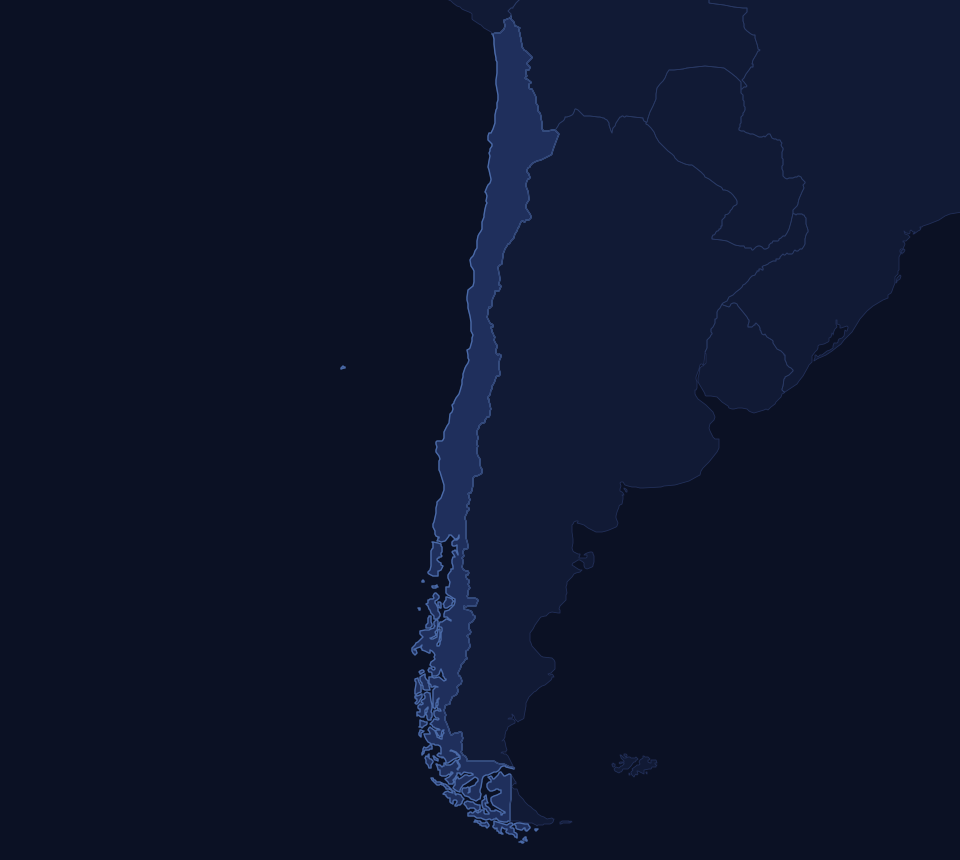
Green dots are observatories open to the public, blue dots research or private sites, squares dark sky places; select one for its page. See Observatories in Chile for the full list.
The coordinates on this page point to La Silla Observatory: 29.258°S, 70.738°W.
Map data © OpenStreetMap contributors. Open the larger map · Directions. Mountain observatory roads are often gated after dark; go only on a scheduled public night.
Dark sky places, observatories and clubs near La Silla Observatory
Nearest dark sky places
| Place | Where | Bortle | Distance |
|---|---|---|---|
| Gabriela Mistral Dark Sky Sanctuary | Vicuna, Chile | 2 | 101 km (63 mi) |
| Río Hurtado | Pichasca, Chile | 2 | 127 km (79 mi) |
| Bosque Fray Jorge National Park | Ovalle, Chile | 2 | 181 km (112 mi) |
Other observatories open to the public within 150 km
- New Technology TelescopeLa Silla, Coquimbo Region, Chile, 0 km (0 mi). Part of ESO La Silla public visits
- ESO 3.6m TelescopeLa Silla, Coquimbo Region, Chile, 1 km (0 mi). Part of ESO La Silla public visits (Saturdays; book ahead)
- Swope TelescopeCerro Las Campanas, Atacama Region, Chile, 27 km (17 mi). Research site; public visits limited, by arrangement with LCO
- Magellan TelescopesCerro Las Campanas, Atacama Region, Chile, 27 km (17 mi). Research site; public visits limited, by arrangement with LCO
- Las Campanas ObservatoryCerro Las Campanas, Atacama Region, Chile, 27 km (17 mi). Limited visits by prior arrangement; check site
- Du Pont TelescopeCerro Las Campanas, Atacama Region, Chile, 27 km (17 mi). Research site; public visits limited, by arrangement with LCO
La Silla Observatory record
Every value in the observatories dataset for La Silla Observatory
| ID | 99 |
|---|---|
| Name | La Silla Observatory |
| City | La Silla |
| State | Coquimbo Region |
| Country | Chile |
| Continent | South America |
| Web | https://www.eso.org/public/teles-instr/lasilla/ |
| Public | y |
| Jobs | https://recruitment.eso.org/ |
| Telescope | multiple telescopes |
| Complex | multi-telescope complex |
| Parent | ESO |
| Elevation | 2400 |
| Notes | NE of La Serena |
| Lat | -29.2575 |
| Lon | -70.73750 |
| LatLonSpot | La Silla Observatory |
| Status | Active |
| StatusNote | ESO's first site (1969) |
| PublicNote | Free guided visits Saturdays 10 am and 2 pm Sep-Mar; Sat and Sun 10 am Apr-Aug; book ahead |
| Sources | https://eso.org/public/about-eso/visitors |
From the site's observatories dataset (observatoriesglobal_q426). Distances are computed from the coordinates.