
Can you visit LIGO Livingston Observatory? Yes
Free Science Saturday open house 1st Saturday monthly, 10am-4pm at the Science Education Center; tours if you arrive before 2:30 pm.
A public night at an observatory usually starts at dusk with a short talk, then a line at the eyepiece of the main telescope for the Moon, a planet or a bright cluster, with volunteers' smaller telescopes set up outside. Dress for the night air even in summer: domes are not heated, so the telescope stays at outside temperature. Many nights sell out or cancel for clouds, so check the observatory's site on the day.

What LIGO Livingston Observatory observes
The list does not describe the instruments at LIGO Livingston Observatory yet; the official site has them.
How dark the sky is at LIGO Livingston Observatory
LIGO Livingston Observatory has no Bortle rating in the list yet. The scale below shows what each class looks like.
Sky brightness and class come from the World Atlas of Artificial Night Sky Brightness (Falchi et al. 2016, CC BY-NC 4.0), with natural skyglow added, at the coordinates below. Research telescopes are often sited on mountains above the haze, so the real sky can be darker than the map suggests.
LIGO Livingston Observatory among the observatories of Louisiana
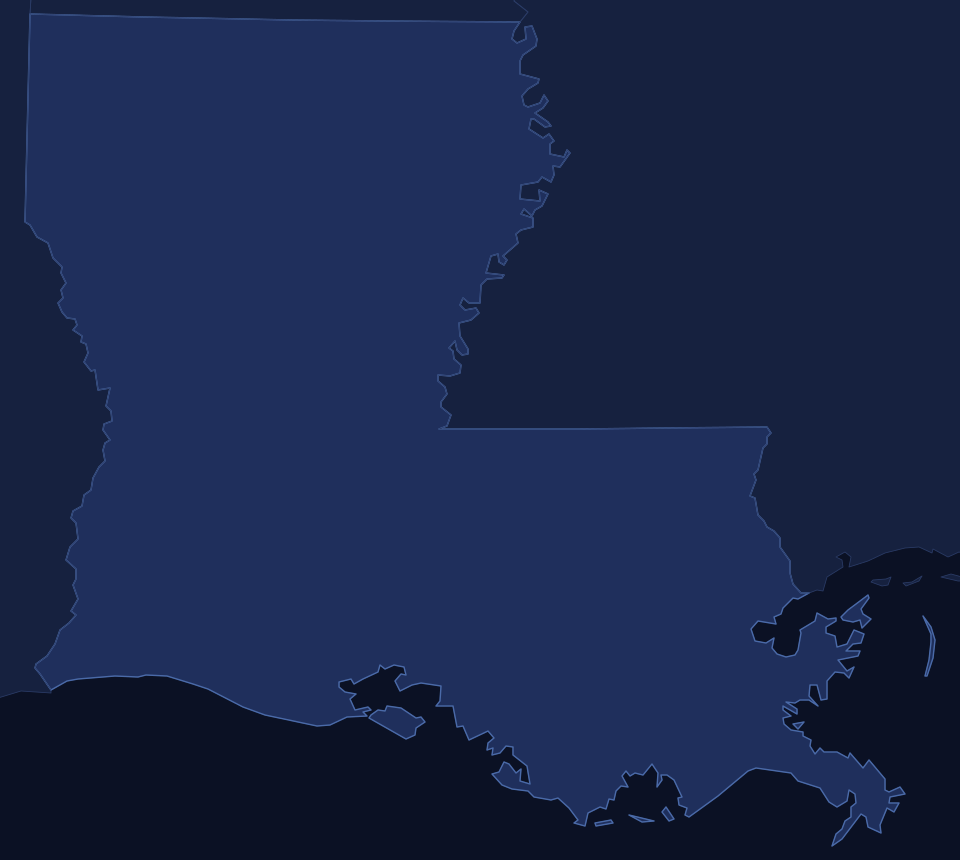
Green dots are observatories open to the public, blue dots research or private sites, squares dark sky places; select one for its page. See Louisiana observatories for the full list.
The coordinates on this page point to zip 70754 (approximate): 30.474°N, 90.767°W.
Map data © OpenStreetMap contributors. Open the larger map · Directions. Mountain observatory roads are often gated after dark; go only on a scheduled public night.
Dark sky places, observatories and clubs near LIGO Livingston Observatory
Nearest dark sky places
| Place | Where | Bortle | Distance |
|---|---|---|---|
| Highland Road Community Park | Louisiana | 7 | 33 km (20 mi) |
| Lake Fausse Pointe State Park | Louisiana | 4 | 94 km (58 mi) |
| Clark Creek Natural Area | Mississippi | 3 | 97 km (61 mi) |
| Homochitto National Forest | Mississippi | 3 | 117 km (72 mi) |
| Cypremort Point State Park | Louisiana | 4 | 133 km (83 mi) |
| Palmetto Island State Park | Louisiana | 4 | 149 km (93 mi) |
Other observatories open to the public within 150 km
- Highland Road Park ObservatoryBaton Rouge, Louisiana, 33 km (21 mi). BREC/LSU public observatory with Evening Sky Viewing nights and events; schedule on hrpo.lsu.edu
Astronomy clubs within 150 km
- Baton Rouge Astronomical SocietyBaton Rouge, Louisiana, 32 km (20 mi). Meets 2nd Monday monthly, 7 pm
- Pontchartrain Astronomy SocietyNew Orleans, Louisiana, 88 km (54 mi). Meets Monthly Wednesday, 7-9 pm
Star parties near LIGO Livingston Observatory
| Star party | Near | Distance | Usual timing |
|---|---|---|---|
| Midsouth Stargaze | French Camp, Mississippi | 340 km (211 mi) | Spring |
Planning a trip? Astrotourism in Louisiana puts the dark sky places, observatories, clubs, star parties, planetariums and science centers of the state on one map, with the best night out worked out.
LIGO Livingston Observatory record
Every value in the observatories dataset for LIGO Livingston Observatory
| ID | 336 |
|---|---|
| Name | LIGO Livingston Observatory |
| Address | 19100 LIGO Lane |
| City | Livingston |
| State | LA |
| Zip | 70754 |
| Country | USA |
| Web | https://www.ligo.caltech.edu/LA |
| Public | y |
| Lat | 30.47410 |
| Lon | -90.76730 |
| LatLonSpot | zip 70754 (approximate) |
| Status | Active |
| StatusNote | Gravitational-wave detector |
| PublicNote | Free Science Saturday open house 1st Saturday monthly, 10am-4pm at the Science Education Center; tours if you arrive before 2:30 pm |
| Sources | https://www.ligo.caltech.edu/page/Science-Saturdays |
From the site's observatories dataset (observatories_q426). Distances are computed from the coordinates.